Healing Crystals: Science or Pseudoscience? What Does the Research Really Tell Us?
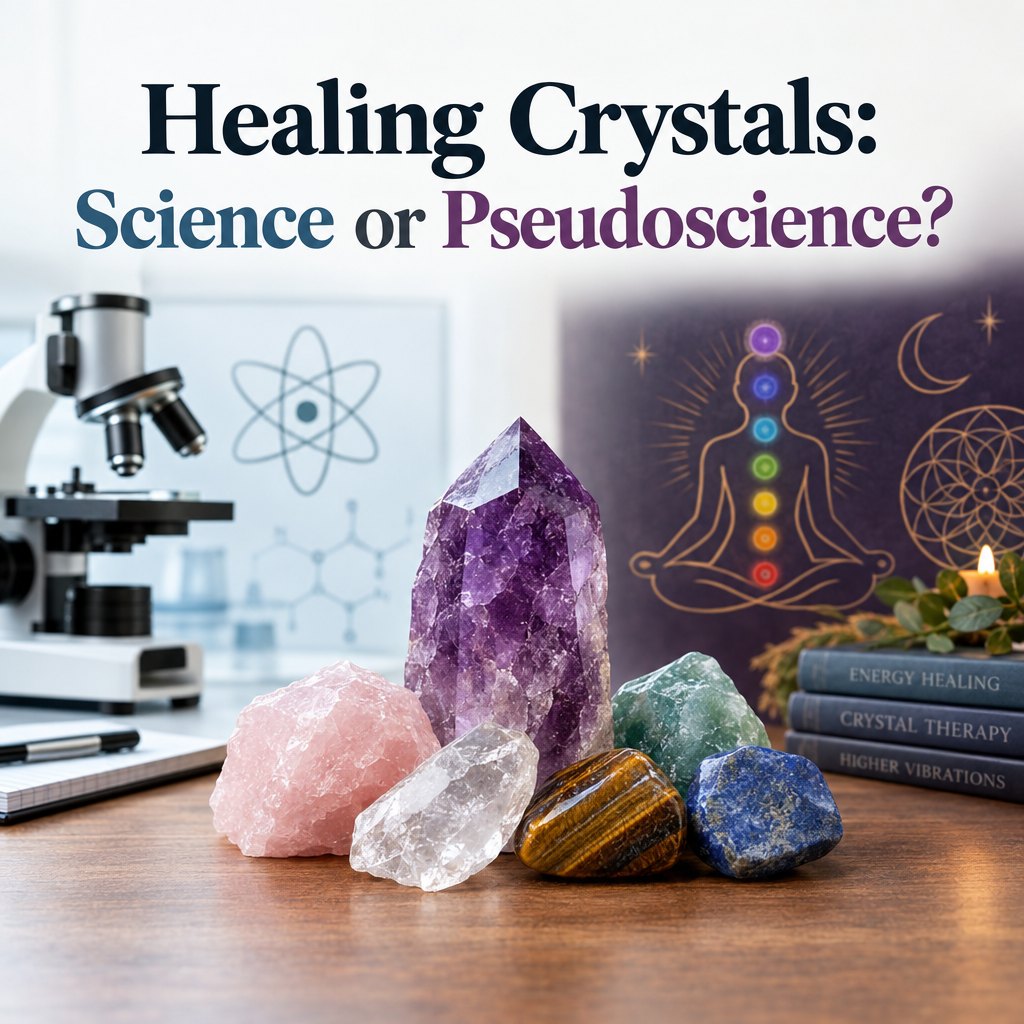
Crystals really do vibrate. Some can even generate electricity. But does that mean they can heal us? That's the million-dollar question.
For thousands of years, people have believed that certain crystals possess special powers. Today, you'll find crystals being promoted for everything from reducing anxiety and improving sleep to balancing energy and promoting physical healing.
People are always telling me about crystals' healing properties, some even giving me stones to carry in my pocket. This eventually got me thinking: is there any real science behind these claims, or is this another example of pseudoscience borrowing scientific terminology to sound credible? I decided to use my background in technology and AI and do a deep dive into the subject, and that's what inspired my latest episode of The Learnetics AI Podcast: "Healing Crystals: Science or Pseudoscience?"
Crystals Really Do Have Frequencies
After more than 35 years in technology, I was already familiar with some remarkable properties of quartz crystals. For example, I've known for years that quartz is used in watches and electronic devices because it can resonate at extremely stable frequencies.
A typical quartz watch uses a crystal oscillator vibrating at 32,768 cycles per second. That's what allows it to keep such accurate time.
Quartz also has an interesting property called piezoelectricity. When you apply mechanical pressure to the crystal, it can generate an electrical charge. Conversely, applying an electrical voltage can cause the crystal to deform slightly.
All of this is well-established science. But just because crystals have measurable physical properties, does that mean they can influence our health, emotions, or even help the body heal itself?
That's what prompted me to look more closely at the claims surrounding crystal healing and what the scientific research actually tells us.
Healing Crystals?
If you've ever visited a crystal shop, you've probably seen descriptions of the supposed healing properties of different stones.
Rose quartz is often associated with love and emotional healing. Amethyst is promoted for relaxation and better sleep. Clear quartz is sometimes described as an energy amplifier.
But when we look at these claims scientifically, we have to ask some basic questions.
What kind of energy are we talking about? Can we measure it? How does it interact with the body? Most importantly, can we show that these crystals produce benefits beyond what someone might experience from a placebo?
Those questions are at the heart of scientific investigation.
A Fascinating Study About Rose Quartz
One of the most interesting pieces of research we discuss in the podcast involves a 2025 study examining rose quartz and anxiety. Researchers compared genuine rose quartz crystals with visually similar placebo stones. The results were revealing.
People who already believed in crystal healing sometimes reported feeling less anxious, but the genuine crystals didn't outperform the placebo stones. In other words, participants' expectations seemed to matter more than the crystals themselves. Now, that doesn't mean the participants were imagining their experiences. The placebo effect is a genuine and fascinating psychological and biological phenomenon. Our expectations can influence how we experience certain symptoms, including pain and anxiety.
And that raises another intriguing question. Could the real power behind crystal healing have more to do with our brains than with the crystals themselves?
When Scientific Language Becomes Pseudoscience
Another aspect of this subject that interests me is how people sometimes use scientific terminology to support claims that haven't been demonstrated. Words like frequency, vibration, energy, and quantum are legitimate scientific terms. But they also appear frequently in advertising for alternative healing products. Just because something is described as having a particular frequency doesn't mean that frequency has a therapeutic effect. And calling something "quantum healing" doesn't automatically give it a scientific foundation.
At Learnetics.ai, I'm interested in helping people understand not just what science tells us, but how to evaluate claims that sound scientific. That's becoming increasingly important in a world where AI can generate convincing articles, videos, and explanations that aren't necessarily accurate.
What You'll Discover in the Podcast
In this episode, Alex and Maya explore some fascinating questions:
- Do crystals really vibrate, and what does that mean scientifically?
- Why is quartz used in watches, computers, and electronic devices?
- Can crystals actually reduce stress, improve sleep, or balance the body's energy?
- What have controlled scientific studies discovered about crystal healing?
- How does the placebo effect influence what we experience?
- Why do some pseudoscientific claims sound so convincing?
We also look at the difference between using crystals as part of a personal relaxation practice and relying on them to treat medical conditions.
Why I Think This Conversation Matters
As a technologist, I've learned that one of the most valuable things we can do is ask questions. Not every claim that sounds scientific is supported by science. And not everything we experience has the explanation we initially believe.
I also think it's important to approach subjects like crystal healing with an open mind, but one that is also willing to follow the evidence. People can have meaningful personal experiences with crystals. That doesn't necessarily mean the scientific explanations offered for those experiences are correct.
For me, that's what makes this subject worth exploring. Perhaps the most interesting discovery isn't what crystals can do for us, but what our minds can do.
Listen to Healing Crystals: Science or Pseudoscience?
Join Alex and Maya on The Learnetics AI Podcast as they explore the fascinating world of healing crystals, examine the research, and draw the line between established science and unsupported claims. Whether you're a believer, a skeptic, or simply curious, I think you'll find this conversation interesting.
🎧 Listen to the podcast: Spotify or YouTube
Stay curious. Keep learning. And never stop asking questions.
Fito Kahn
Learnetics.ai